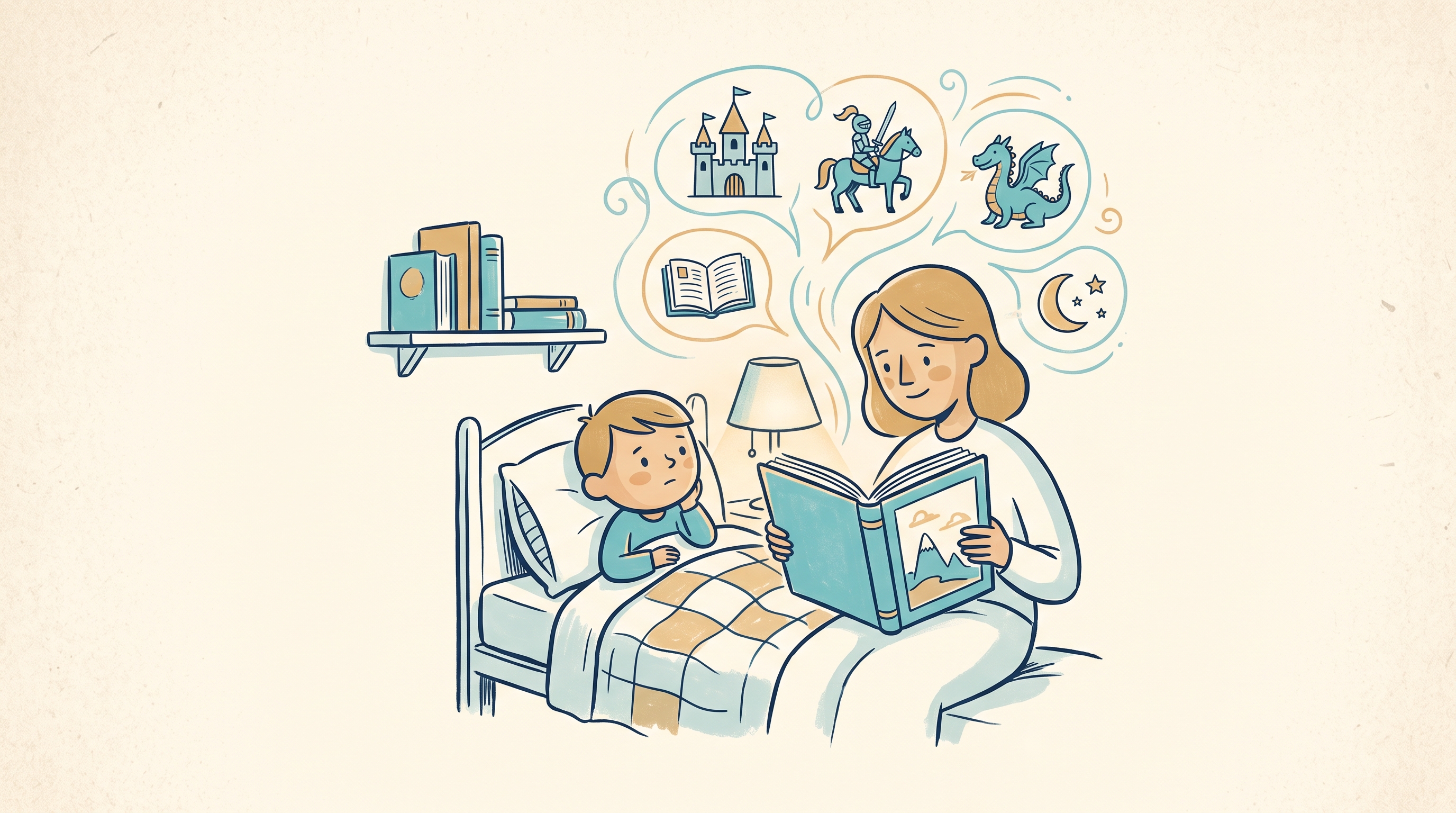
In a quiet bedroom in Bristol, six-year-old Leo handed his mother a worn copy of a tale about a clockmaker's cat for the eleventh night in a row.
For many parents, this moment comes with a secret wave of exhaustion. You have read every page, imitated every clock chime, and memorized every twist in the plot. It is easy to wonder if returning to the same forty pages night after night means a young reader has stopped moving forward, or if their imagination has anchored itself to a single comfortable shore.
The reality is much stranger and far more wonderful. The repeat loop is not a stall. It is the precise moment a reader stops merely visiting a story and begins to inhabit it.
Mapping the Boundaries of a World
The first time a child encounters a story, they are navigating uncharted territory. They are busy figuring out the big landmarks: Who is this character? What is that shadow in the corner? Will the lost kitten find her way home before dark? Because their attention is spent tracking the survival of the plot, the subtle details of the world float past unnoticed.
By the third or fourth visit, the fear of the unknown evaporates. The listener knows the kitten gets home safely. The monster in the orchard turns out to be an overgrown bear with a taste for pears. With the anxiety of plot resolved, the child’s eyes wander off the main trail.
Now, on the fifth read, they notice the pattern of stars carved into the clockmaker’s workshop floor. They hear the subtle cadence of the sentence that introduces the storm. They begin to understand cause and effect not as a series of surprises, but as an intentional architecture. They are no longer just listening to what happens; they are mapping how the world itself is constructed.
The Music and Weight of Words
Language carries a rhythm that only reveals itself through repetition. When adults read a fresh book, we skim for meaning, gathering information at speed. Children read with their whole body—listening for the cadence of a line, the musical pop of a strange adjective, the satisfying thud of a recurring refrain.
A phrase like the copper gears hummed in the deep night means very little on first hearing beyond its basic sense. But heard seven times across a fortnight, those words turn into something tangible. The reader begins to anticipate the exact breath before hummed. They learn how a sentence balances its weight, how a pause builds quiet tension, and how a word can evoke the feeling of cold metal or warm tea.
This is how vocabulary takes root. It is not learned through flashcards or quick drills, but by dwelling inside a phrase until its shape feels familiar in the mouth. Long before a child writes their first full sentence on paper, they have absorbed the melody of narrative from the stories they refuse to put down.
From Canon to Creation
There is a profound comfort in a canon that does not change. In a world full of unpredictable days, a beloved story offers absolute certainty. The clockmaker will always leave the brass key under the flowerpot. The cat will always leap onto the windowsill at midnight.
Yet this absolute predictability does not trap a child's imagination—it liberates it. Once a reader knows the rules of a universe down to its smallest cobble, they gain the confidence to play inside it.
Listen closely to a child who has heard the same story twenty times, and you will hear the beginnings of authorship. They will interrupt the text to ask what the cat was doing while the clockmaker went to the baker’s shop. They will invent a brother for the main character or decide that the mysterious door at the back of the workshop leads to a hidden garden. By mastering the established canon, they give themselves permission to build on it. The deepest familiarity with someone else's world is almost always the spark that inspires a reader to create one of their own.
Trusting the Repeat
When a child reaches for the same worn cover night after night, they are not refusing to learn. They are deepening their craft as a reader. They are lingering over the brushstrokes, testing the weight of the prose, and making sure the floorboards of that imaginary room hold firm underfoot.
The fifth read-through builds an intimate map of how stories are made, giving young creators the tools to navigate any universe they encounter next.
Newsletter
A little more wonder, weekly.
Story ideas, parenting reads, and what we’re building next.
Like this? There's one more next week
Free weekly note on using stories to navigate the things parenting books skip.
No spam. Just story inspiration and new feature updates.
Written by
Founder, Inky
Building Inky — an AI storytelling studio for personalized, imaginative stories. Writing about raising readers and creativity.


