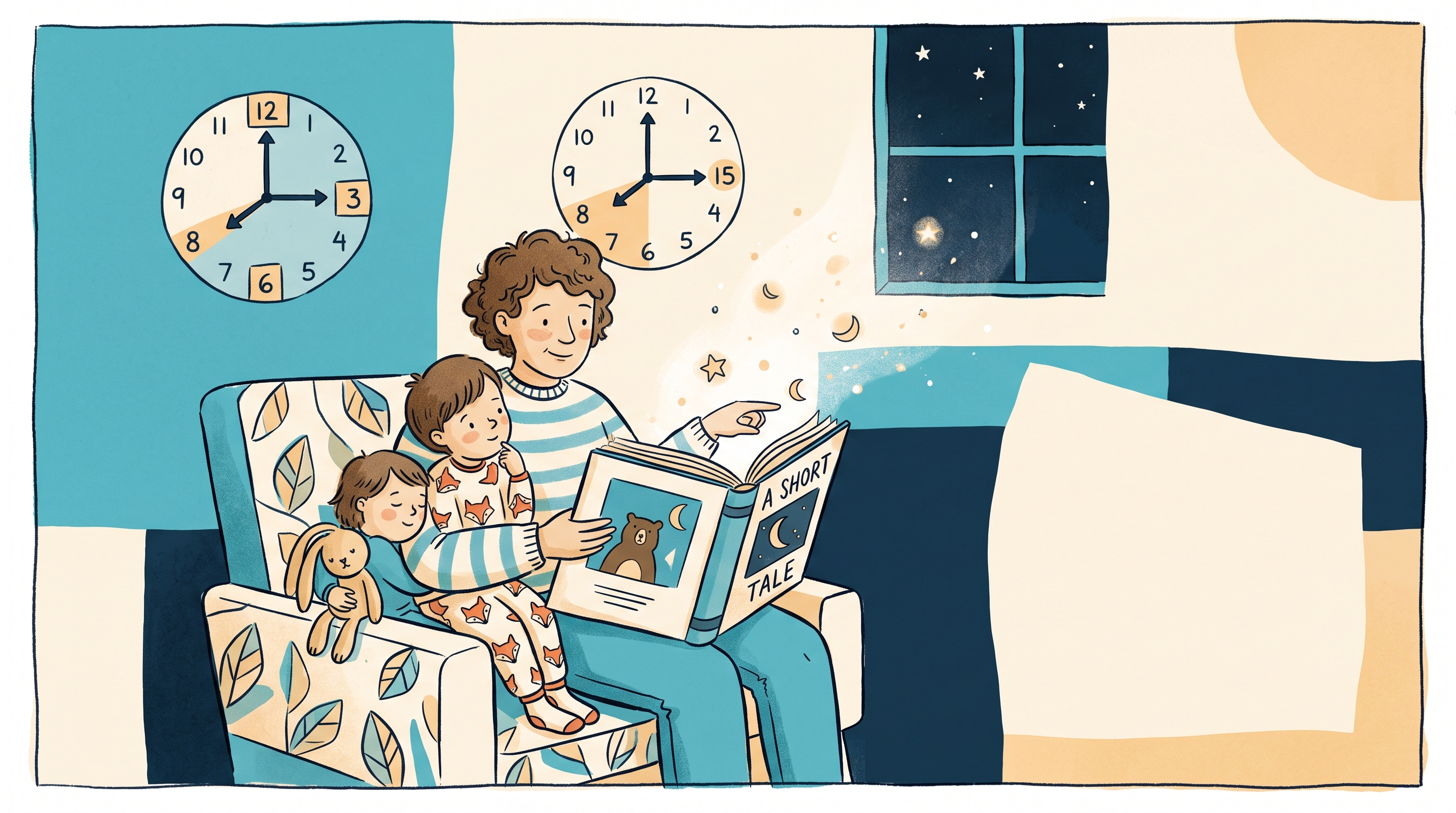
In 1937, J.R.R. Tolkien published The Hobbit after years of shaping the landscape of Middle-earth in brief bedtime installments told to his children. Those quiet evening sessions were rarely long, yet they established one of the most enduring story-worlds in modern literature. For parents navigating bedtime routines today, the lesson remains surprisingly practical: a grand narrative universe does not require hours of nightly reading. A focused fifteen minutes is more than enough to cultivate literacy, expand vocabulary, and kindle a lifelong love of stories.
When a day ends in tiredness and lingering chores, the prospect of an extended storytime can feel overwhelming. Many parents worry that a brief reading session is insufficient to make a meaningful difference in a child's language development. Literacy research, however, reveals the opposite. Regular, predictable exposure to spoken narrative matters far more than the total duration of any single evening.
The Power of the Short Nightly Ritual
Reading aloud for fifteen minutes every evening exposes a young child to over one million words of spoken text across a single year. More importantly, written stories contain a far richer variety of vocabulary and complex sentence structures than everyday conversational speech. When an adult reads aloud, the child hears rhythm, cadence, and expression that help decode meaning long before they can process dense print independently.
The psychological impact of brevity is equally significant. A fifteen-minute window fits comfortably into a child's natural attention span at the end of the day. Pushing beyond that threshold often transforms a peaceful transition into a battle against fatigue. When reading stops while the child is still fully engaged, curiosity remains active, leaving them eager to return to the book tomorrow.
Why Five Minutes Still Counts
Life rarely runs on an unbroken schedule. Some evenings bring late arrivals, unexpected disruptions, or sheer exhaustion. On those nights, sitting down for even five minutes to complete a single page or revisit a favorite character keeps the habit intact.
Skipping a night entirely breaks the invisible thread of narrative momentum. In contrast, opening the book for a few brief moments sends a clear message: this world and these characters are a permanent part of our day. The night you read for five minutes still counts, because consistency is what protects the space for imagination.
When a family returns to the same story-world evening after evening, the story becomes a living environment. Children begin to remember character choices, trace cause and effect across chapters, and anticipate future plot shifts. They develop an intuitive understanding of lore and canon—the internal rules that make a fictional world feel authentic and real.
Building Canon and Curiosity Across Nights
This incremental building of story-worlds sparks creative processing. A child who spends fifteen minutes exploring a dragon-filled mountain or an undersea kingdom carries that setting into their independent play and quiet thinking. They begin to ask questions about what lies beyond the map or what happens to minor characters after a chapter closes.
This curiosity is where active creation begins. When children see how small daily details construct a vast narrative, they realize that stories are not static objects made by distant strangers. They begin to spin off their own tales, invent new characters, and nurture worlds that grow alongside their own experiences. Whether a parent is reading a classic physical book or exploring interactive story-creation environments like Inky, the magic lies in nurturing that collaborative spark.
Crafting a Sustainable Bedtime World
Making the most of fifteen minutes requires no dramatic theatrical skills or elaborate preparation. A few simple choices can turn a short reading window into a meaningful daily ritual:
- Choose stories with rich world-building. Intricate settings and distinct character voices give children more imaginative terrain to explore across multiple nights.
- Let the child guide the pace. Pausing to examine an illustration or discuss why a character made a specific choice is far more valuable than rushing to finish a section.
- Keep the ending open. Pausing at a moment of mild suspense or wonder gives the child something to anticipate as they drift off to sleep.
- Protect the routine without rigidity. Treat fifteen minutes as a comfortable target, not an ironclad quota.
The true value of bedtime reading is measured not by the hands of a clock, but by whether a child carries the story across the threshold of sleep. When fifteen minutes of shared story time becomes a steady daily anchor, it builds a lasting bridge between a child's immediate world and the boundless universes waiting to be explored.
Newsletter
A little more wonder, weekly.
Story ideas, parenting reads, and what we’re building next.
Like this? There's one more next week
Free weekly note on using stories to navigate the things parenting books skip.
No spam. Just story inspiration and new feature updates.
Written by
Founder, Inky
Building Inky — an AI storytelling studio for personalized, imaginative stories. Writing about raising readers and creativity.

