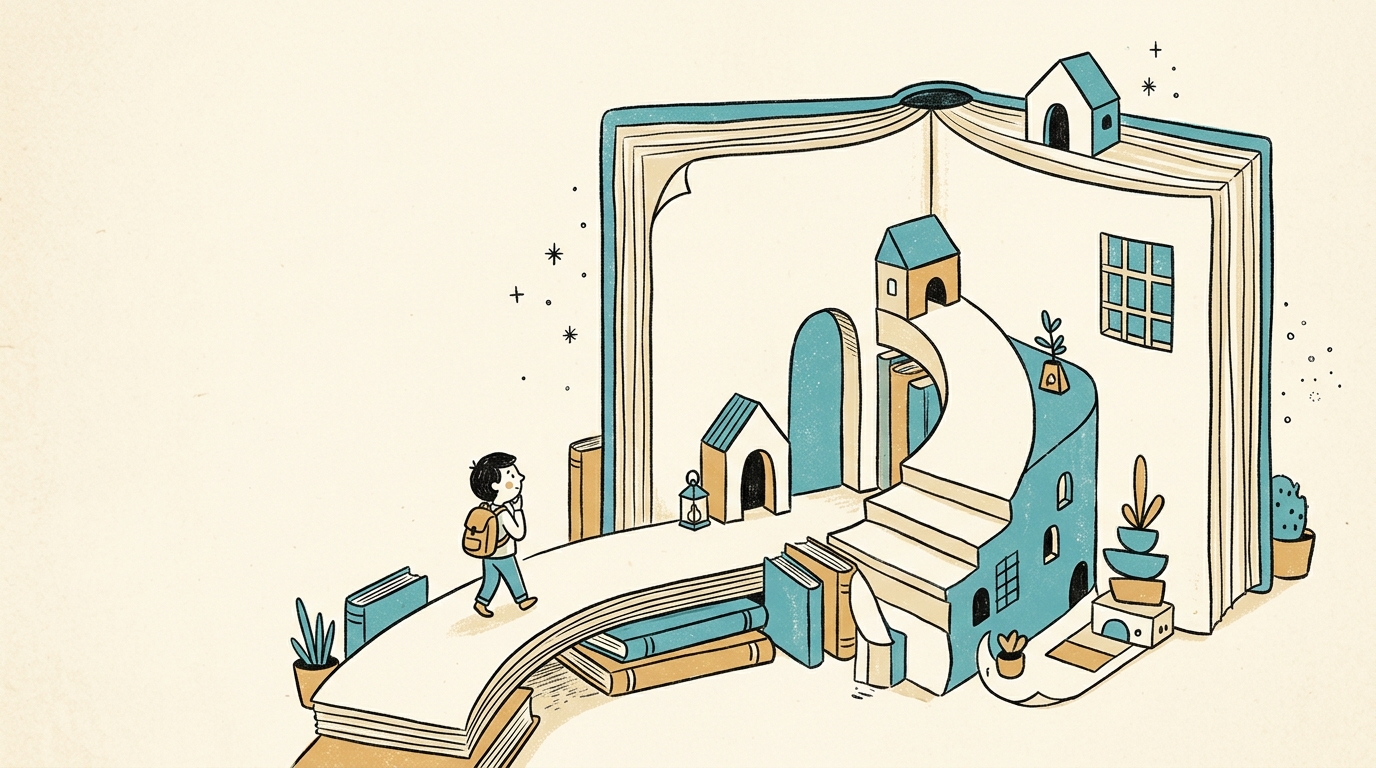
In 1961, the illustrator Cyril Hayes produced a series of 48 intricate line drawings that demonstrated how a single black border could hold a child’s attention longer than a television broadcast. This observation remains relevant in a landscape where digital noise often competes for the focus of young builders and authors. When a person sits down with a printed page and a set of colored pencils, the environment changes. The hum of the household recedes, replaced by the rhythmic scratch of wax on paper. This is not merely a way to pass the time; it is a fundamental act of world-building that begins with a single, unadorned line.
The Tactile Reality of the Line
The weight of a physical page provides a sensory grounding that a glass screen cannot replicate. When a child presses a crayon against a printable sheet, they experience the resistance of the fibers and the way the pigment catches on the tooth of the paper. This tactile feedback is essential for developing fine motor skills, but its primary value lies in the slow, deliberate pace it enforces. There is no button to undo a stroke, which encourages a different kind of creative problem-solving. A stray mark becomes a scar on a dragon’s wing or a new vine in a jungle canopy.
By offering these pages as a free, open resource without the friction of signups or accounts, the focus remains entirely on the craft. The goal is to provide a bridge from the digital world to the physical one. A parent can find a gallery of images, select a theme that resonates with their child’s current obsession, and have a physical canvas ready in seconds. This immediacy transforms the home into a studio, where the only requirement for entry is curiosity.
Galleries of Prehistoric and Celestial Worlds
The themes within a library of coloring pages act as entry points into much larger narratives. In a gallery dedicated to dinosaurs, the line art does more than depict a creature; it establishes a prehistoric canon. A printable Stegosaurus or Triceratops invites the artist to consider the environment these animals inhabited. Was the sky a heavy, volcanic orange or a clear, ancient blue? By choosing the palette, the artist begins to define the rules of that specific story-world.
The same principle applies to celestial or deep-sea themes. A line drawing of a starship or a lunar base provides the structural skeleton, but the coloring process adds the soul. One builder might see a sleek, silver vessel intended for peaceful exploration, while another uses deep reds and charcoal greys to indicate a weathered ship that has seen a thousand battles. These galleries are not just a collection of individual sheets; they are catalogs of possibilities where every reader becomes an author of the scene.
The Off-Screen Sanctuary
The transition to an off-screen activity is often a moment of relief in a busy day. Educators and parents frequently note that the quietude found in coloring serves as a form of "active rest." It occupies the hands and the visual cortex while leaving the mind free to wander and invent. This is the space where the next chapter of a story is often born. While coloring a forest scene, a child might wonder who lives in the hollow of the oak tree or what lies beyond the misty mountains in the background.
Removing the digital interface removes the distractions of notifications and bright, shifting light. The paper does not move. It waits for the creator. This stability is particularly important for younger children who are still learning to navigate the vastness of their own imaginations. The line art provides a safe harbor—a set of boundaries that actually grants more freedom because the "what" is established, leaving the "how" and the "why" entirely up to the person holding the pen.
A World Built One Stroke at a Time
Every finished page is a record of a journey. When a library of these pages is made available to a global community, it creates a shared language of imagery that transcends borders. A child in Tokyo and a child in Toronto can both color the same enchanted castle, yet the two results will never be identical. One might be a fortress of ice, while the other is a palace of sun-drenched gold. This is where ideas become worlds, starting with a simple black-and-white outline and ending with a unique vision that belongs solely to the person who created it.
These printable sheets are the first step in a larger cycle of storytelling. They allow anyone to take a piece of a universe home, print it out, and make it their own. There is no need for complex tools or expensive materials; a single pencil can bring an entire landscape to life. When the coloring is finished, the story does not end. The page is often taped to a wall or tucked into a binder, becoming a permanent part of the creator’s personal canon. The moment the pencil touches the paper, the reader ceases to be a spectator and becomes a builder of that world.
Newsletter
A little more wonder, weekly.
Story ideas, parenting reads, and what we’re building next.
Like this? There's one more next week
Free weekly note on using stories to navigate the things parenting books skip.
No spam. Just story inspiration and new feature updates.
Written by
Founder, Inky
Building Inky — an AI storytelling studio for personalized, imaginative stories. Writing about raising readers and creativity.