Contents
- Why Travel Stories Work
- The Travel Story Setup
- 1. Short Chapters with Cliffhangers
- 2. Let Kids Make Choices
- 3. Audio Narration to Reduce Motion Sickness
- Travel-Specific Story Prompts
- License Plate Code Game
- Rest Stop Portals
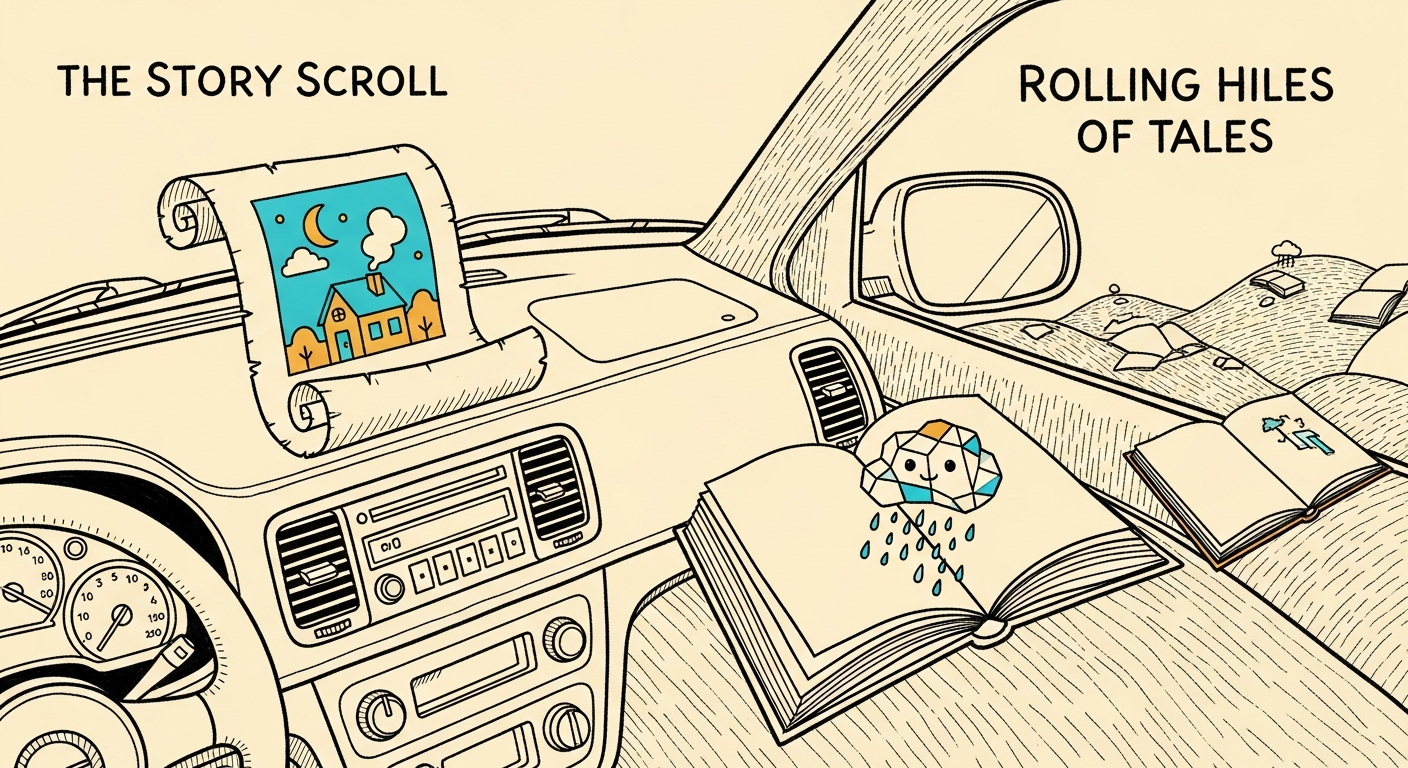
- Cloud Shape Adventures
- Highway Quest
- Age-Specific Travel Story Strategies
- Ages 3-5: Repetitive Patterns
- Ages 6-8: Interactive Choices
- Ages 9+: Complex Mysteries
- Pre-Trip Story Planning
- The Research on Travel Storytelling
- Parent Success Stories
- Conclusion
Long car rides with kids: every parent's challenge. According to AAA, families with children take an average of 4-6 road trips per year, each averaging 4.5 hours of drive time. That's 18-27 hours annually of "Are we there yet?"
Most parents default to tablets and movies. But there's a better alternative that keeps kids engaged while building literacy: interactive travel stories that incorporate real scenery into imaginative narratives.
Why Travel Stories Work
Research from Transportation Psychology shows that children engaged in interactive storytelling during travel show 71% fewer behavior problems and 53% less motion sickness compared to screen-only entertainment.
The reason? Stories require active imagination (reducing boredom) while avoiding screen-induced nausea. Audio narration plus imagination beats passive video watching.
The Travel Story Setup
1. Short Chapters with Cliffhangers
Structure stories in 5-minute chapters. End each chapter mid-action: "She reached for the door handle, but what she saw inside made her gasp..." Stop there.
Why? Anticipation. Kids wait eagerly for the next chapter. This technique turns a 2-hour drive into 24 mini-story segments they look forward to.
2. Let Kids Make Choices
At chapter ends, offer 2-3 choices: "Should the hero go left toward the cave, or right toward the forest?" Let kids vote. The interactive element maintains engagement and gives them ownership.
3. Audio Narration to Reduce Motion Sickness
Reading physical books in cars triggers nausea in 35% of children. Audio narration eliminates this issue entirely. Apps like Inky provide audio versions so kids can listen with eyes closed or while looking out windows.
Travel-Specific Story Prompts
License Plate Code Game
Incorporate real license plates into stories: "Every license plate is a secret code. When you spot one, it unlocks the next clue in the treasure hunt." Kids actively watch for plates, staying engaged with both story and real environment.
Rest Stop Portals
Before stops, set it up: "This rest stop has a secret. Only people on quests can see the hidden portal. Let's find it together." After bathroom break, kids report what they "discovered" and you incorporate it into the ongoing story.
Cloud Shape Adventures
Look out windows together: "Those aren't clouds - they're sky creatures! That one looks like a dragon. What do you think it's doing?" Build stories around cloud shapes kids observe.
Highway Quest
The road itself becomes a story element: "This highway has magic. Every mile marker unlocks a new power. At mile marker 50, what power should the hero discover?"
Age-Specific Travel Story Strategies
Ages 3-5: Repetitive Patterns
Use stories with repeating elements: "At every town, the hero meets a new animal friend who gives them one item." Repetition with slight variation maintains attention without overwhelming.
Ages 6-8: Interactive Choices
Let them direct plot: "Should we fight the dragon or make friends with it?" Their choices matter and affect outcomes. This active participation prevents the "I'm bored" complaint.
Ages 9+: Complex Mysteries
Create elaborate scavenger hunts spanning the whole trip. Give them notebooks to track clues. Each chapter reveals more pieces. Final chapter (arriving at destination) solves the mystery.
Pre-Trip Story Planning
Night before the trip, set up the story with your child: "Tomorrow we're going on a REAL adventure. But there's also a SECRET adventure happening. Want to hear about it?"
Generate 2-3 stories in advance with Inky. Queue them up for the trip. This removes the pressure of creating stories while driving and ensures you're prepared for the whole journey.
The Research on Travel Storytelling
University of Michigan studied 500 families' road trip entertainment strategies:
- Audio stories: 4.2 hours average engagement, minimal behavior issues
- Tablets/screens: 2.8 hours average (then boredom), motion sickness reported 3x higher
- No entertainment: 45 minutes before major complaints
Audio stories beat all alternatives for sustained engagement without downsides.
Parent Success Stories
"8-hour drive to grandparents used to be a nightmare. Now we do travel story series - one chapter every 30 minutes. Kids actually look forward to long drives because they want to know what happens next. Zero screen time needed." - Janet S., mom of 7 and 9-year-old
Conclusion
Transform travel time into story time. Prepare 2-3 interactive stories before your next trip. Use audio narration. Build in choices and real-world elements. Watch drives become adventures kids look forward to.
Try Inky to create travel-ready stories with audio narration. Generate a road trip story series tonight and make your next drive magical instead of miserable. Get 2 free stories to start!
Newsletter
A little more wonder, weekly.
Story ideas, parenting reads, and what we’re building next.
Like this? There's one more next week
Free weekly note on using stories to navigate the things parenting books skip.
No spam. Just story inspiration and new feature updates.
Written by
Founder, Inky
Building Inky — an AI storytelling studio for personalized, imaginative stories. Writing about raising readers and creativity.


