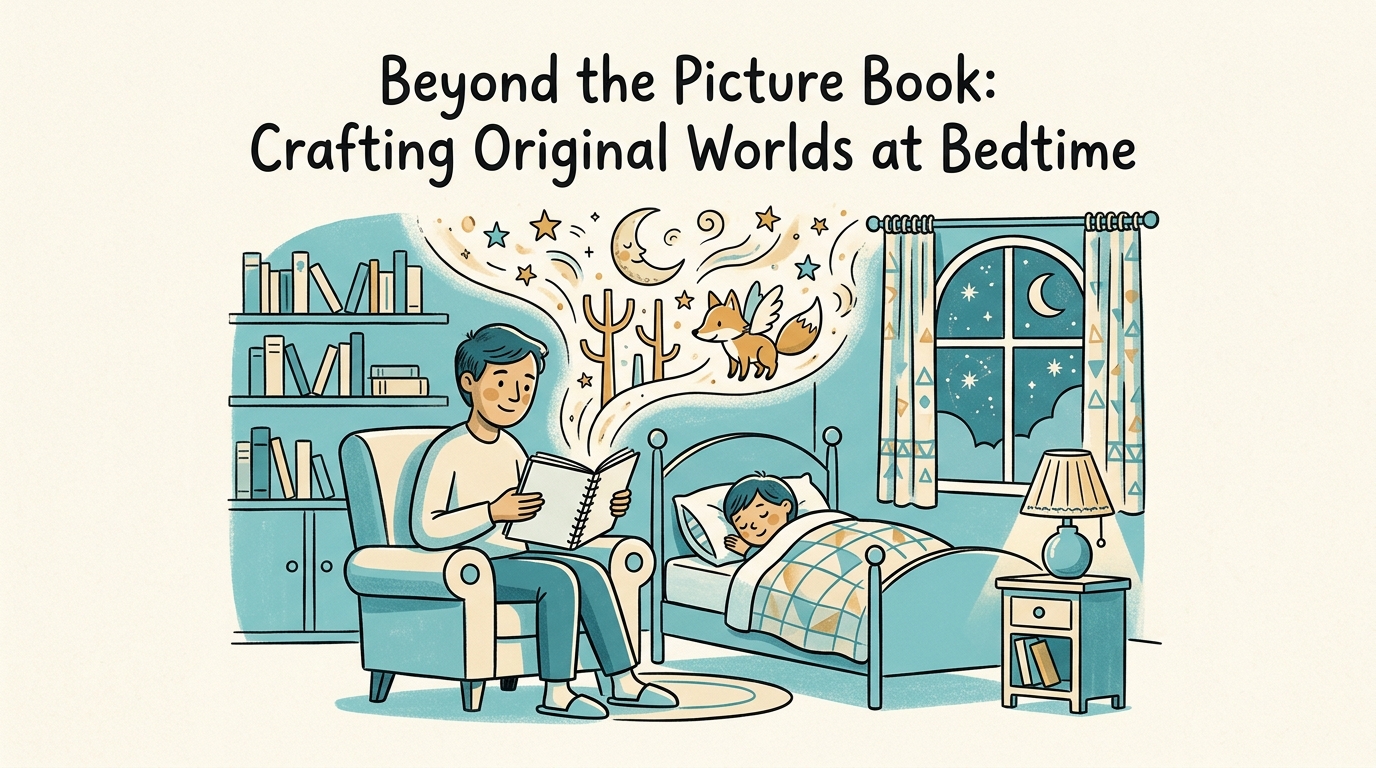
In the quiet of a bedroom in Seattle, a father once told his daughter that there were exactly 42 hidden doors behind the bookshelf, each leading to a different version of their garden. This single sentence did more than start a story; it established a boundary for a world that they would continue to explore for the next three years. When parents move away from the printed page and begin to build a world from scratch, they are not just entertaining a child. They are inviting them into a collaborative space where the rules of reality are negotiable and the characters belong entirely to them.
The Anchor of the Ordinary
The most effective stories often begin with what is already in the room. A stray button on a dresser, a shadow on the ceiling, or a half-empty glass of water can serve as the initial spark. Instead of reaching for a distant kingdom, look at the physical environment through a lens of hidden purpose. A button is not just plastic; it is a shield for a beetle knight. The shadow on the ceiling is not a trick of the light; it is a map of a mountain range that only appears at 8:00 PM.
By rooting the story in the tangible world, the narrative feels grounded. It allows a child to interact with the story-world even after the lights are out. When they see that button the next morning, the story continues in their mind. This technique removes the pressure to be a literary genius. You do not need a complex plot when you have a curious object. You only need to ask what that object does when no one is looking.
The Architecture of a World
Consistency is what separates a disposable tale from a living world. If you decide that the family cat can speak, but only when it is raining, that becomes a law of your universe. These rules, or canon, provide a framework that makes the world feel solid. Children have a keen eye for these details and will often be the first to remind an author when a rule has been broken.
Building a world requires more than just events; it requires a sense of place. Give your setting a name, even if it is just "The Whispering Woods" or "Floor-Lamp City." Describe how the air smells there or what the inhabitants eat for breakfast. When a world has its own internal logic, it begins to grow. You might find that the story you tell on Tuesday naturally leads to a question on Wednesday about how the characters stay warm in the winter. This is how a single idea becomes a series, where the history of the world is built layer by layer over weeks and months.
Prompts to Bridge the Gap
When the imagination feels thin after a long day, specific prompts can act as a bridge. One effective method is the "Two-Thing Collision." Ask your child for a living thing and a machine. A squirrel and a toaster. Suddenly, you are telling a story about a fleet of high-speed bread-transporting rodents. Another approach is the "Secret History." Take a mundane family event—like losing a set of car keys—and attribute it to a hidden society of "Gatherers" who live in the walls and use keys as park benches.
You can also use "What If" scenarios that flip the natural order. What if the sun only came out when people were sad? What if every time you jumped, you stayed in the air for three seconds longer than the time before? These prompts require very little setup but immediately demand exploration. They move the story forward by creating a problem that the characters must navigate using the new rules of their world.
Authors with Soul
The beauty of a parent-led story is that it can be tailored to the specific heart of the child listening. Unlike a mass-produced book, your story can feature a protagonist who shares your child’s fear of loud noises or their specific love for green apples. This is where stories become worlds with soul. You are not just a narrator; you are an author who knows the audience better than anyone else.
Inky provides a space where these fleeting bedtime moments can be captured and expanded, but the core of the craft remains the same: the connection between the teller and the listener. You can spin off any universe, including the ones your child already loves, by introducing a new character who lives just around the corner from their favorite hero. This allows the child to feel like a participant in a much larger global community of creators, where every reader is also an author.
Growing the Universe
As the story progresses, encourage the child to take the lead on certain chapters. Ask them what the character finds inside the silver box or how the dragon feels about the knight’s apology. When a child contributes a detail that becomes part of the permanent canon, they gain a sense of ownership over the narrative. They are no longer just consuming a story; they are building a world.
This collaborative building process creates a shared history that can last a lifetime. The characters you invent together become part of your family’s private language, referenced at the dinner table or during long car rides. The most impactful stories are those that do not end when the book is closed, but continue to evolve as the authors and readers grow together. A child who sees their own ideas incorporated into a story’s canon learns that their imagination has the power to shape the world they inhabit.
Newsletter
A little more wonder, weekly.
Story ideas, parenting reads, and what we’re building next.
Like this? There's one more next week
Free weekly note on using stories to navigate the things parenting books skip.
No spam. Just story inspiration and new feature updates.
Written by
Founder, Inky
Building Inky — an AI storytelling studio for personalized, imaginative stories. Writing about raising readers and creativity.