Contents
- The Science of Dual Coding
- Fluency Modeling
- Reduced Cognitive Load
- When to Use Audio Narration
- During Transitions
- For Struggling or Reluctant Readers
- For Multilingual Exposure
- Before Bedtime
- Audio + Text = Synergy
- Age-Appropriate Audio Usage
- Ages 3-5
- Ages 6-8
- Ages 9+
- Common Concerns Addressed
- "Won't they become dependent on audio?"
- "Does audio count as 'real' reading?"
- Conclusion
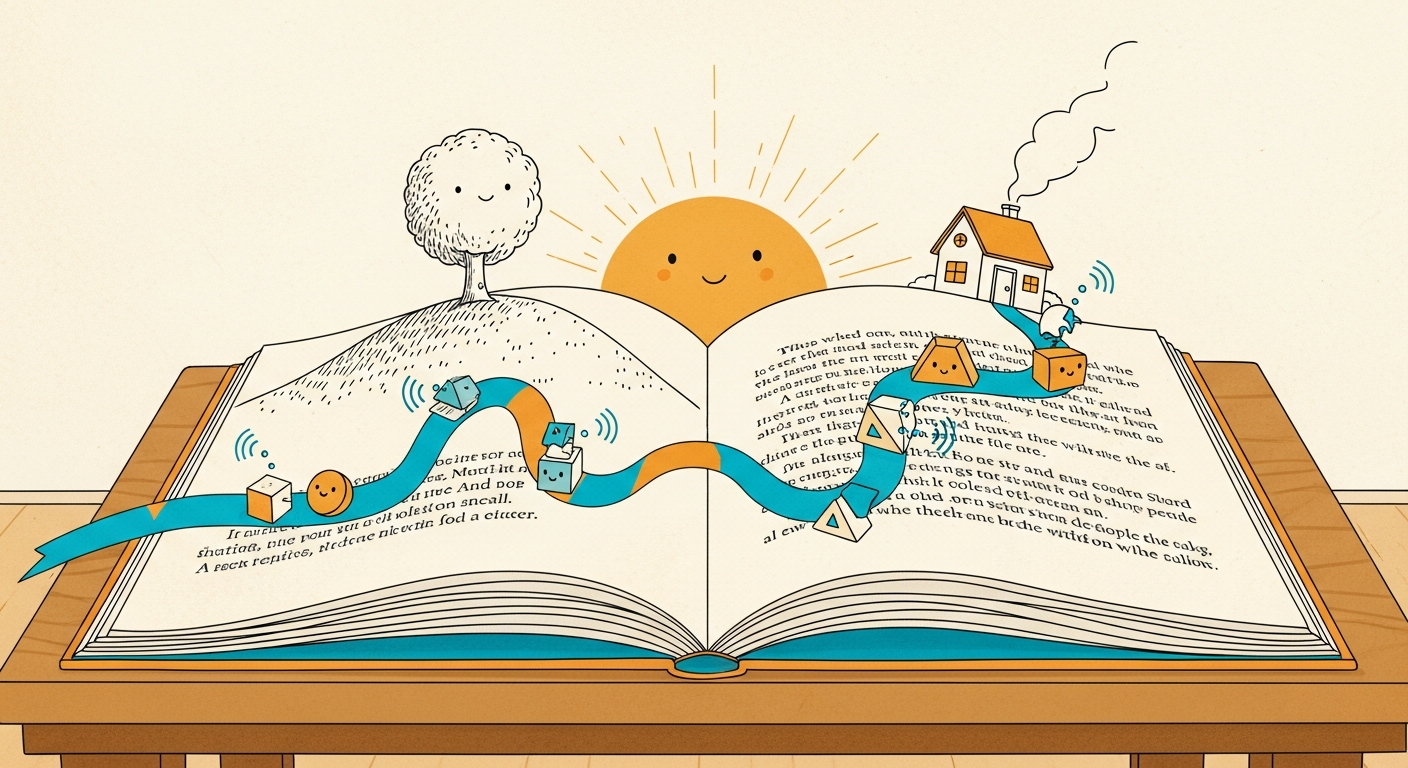
Reading while following audio narration - sometimes called "dual coding" - isn't cheating. It's a research-backed method that actually accelerates reading development while reducing eye strain and motion sickness.
University of Oregon research shows children using audio + text simultaneously show 32% better comprehension and 27% faster fluency development compared to text-only reading.
The Science of Dual Coding
When children simultaneously hear and see words, their brains create dual memory pathways: one auditory, one visual. This redundancy strengthens memory encoding and recall. They're essentially learning each word twice simultaneously.
Fluency Modeling
Professional narration demonstrates proper pacing, expression, and pronunciation. Children unconsciously absorb these patterns. After 6 months of audio-supported reading, kids show 41% better oral reading fluency - they've internalized the modeled patterns.
Reduced Cognitive Load
Decoding text requires significant cognitive energy, especially for young or struggling readers. Audio narration handles decoding, freeing mental resources for comprehension. Kids can focus on understanding the story, not just sounding out words.
When to Use Audio Narration
During Transitions
Car rides, getting ready in morning, during chores. Times when eyes can't focus on text but ears are available. This turns "dead time" into literacy-building time.
For Struggling or Reluctant Readers
Audio support builds confidence. They can enjoy age-appropriate stories even if decoding skills lag behind. Success with audio motivates them to practice text reading. It's scaffolding, not crutch.
For Multilingual Exposure
Hear stories in multiple languages. Audio models pronunciation better than text alone. Kids can listen to Spanish narration while following along, building listening comprehension and pronunciation simultaneously.
Before Bedtime
Audio stories with eyes closed reduces screen exposure before sleep while maintaining story routine. Melatonin production isn't suppressed like with visual screens.
Audio + Text = Synergy
Best practice: audio narration WITH text visible, not audio alone. Following along while listening creates the dual-coding benefit. Eyes track highlighted words as audio plays - like karaoke for reading.
Apps like Inky provide synchronized narration where text highlights as narrator reads. This visual-auditory sync is the gold standard for literacy development.
Age-Appropriate Audio Usage
Ages 3-5
Audio + pictures without text is fine. They're building listening comprehension before reading. Pause frequently to discuss and maintain attention.
Ages 6-8
Audio + text together. Let them follow along with finger on words. This connects sounds to letters - essential phonics practice.
Ages 9+
Alternate: some stories audio-only (building imagination), some audio + text (building vocabulary), some text-only (building independence). Variety prevents over-reliance on any single method.
Common Concerns Addressed
"Won't they become dependent on audio?"
Research says no. Audio is training wheels, not crutch. As reading confidence builds, kids naturally transition to text-only. Studies show 89% of kids using audio support eventually prefer independent reading once fluency develops.
"Does audio count as 'real' reading?"
YES. Listening comprehension develops ahead of reading comprehension and predicts future reading success. Audiobook listening builds vocabulary, story structure understanding, and love of narrative - all essential reading foundations.
Conclusion
Audio narration paired with text accelerates reading development while making literacy accessible to all learners. Use during transitions, for reluctant readers, and as fluency modeling tool.
Try Inky's audio narration feature - synchronized text highlighting while professional voice reads. Perfect for building fluency and comprehension simultaneously. Get 2 free stories with audio today!
Newsletter
A little more wonder, weekly.
Story ideas, parenting reads, and what we’re building next.
Like this? There's one more next week
Free weekly note on using stories to navigate the things parenting books skip.
No spam. Just story inspiration and new feature updates.
Written by
Founder, Inky
Building Inky — an AI storytelling studio for personalized, imaginative stories. Writing about raising readers and creativity.


